
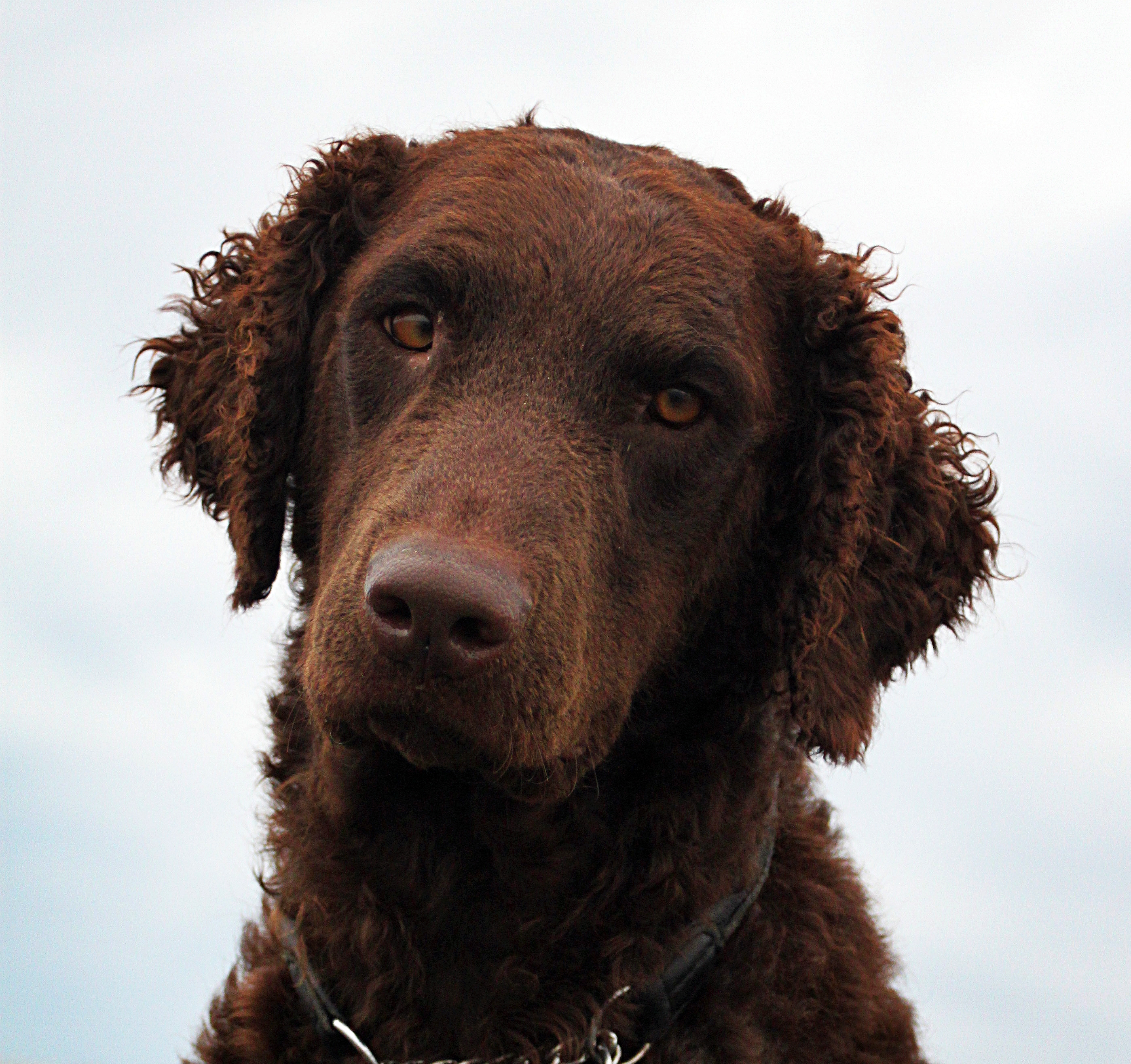
An early English retriever
The Curly-Coated Retriever belongs to the English history of retrieving dogs developed to collect shot game, including from water. The American Kennel Club records the breed at Birmingham's dog show in 1860 and later exports to New Zealand and Australia in 1889.
Accounts of the breed's exact ancestry remain less certain than those show records. Different primary organisations also give conflicting early club dates, so a neat founding-date story would suggest more agreement than the sources provide.
The curls are the signature
The FCI standard describes tight, crisp curls lying close to the skin, with smooth hair elsewhere and no undercoat. This is a distinct texture, not simply a long-coated retriever clipped into curls. The tall, strong outline should still convey elegance and freedom of movement.
Confidence with an independent streak
The breed ideal includes steadiness and self-confidence, but also independence and possible aloofness. Build a relationship through varied, rewarding tasks rather than assuming the dog will work endlessly for any person. Supervise water activity and provide opportunities to rest afterwards.
Care in daily life
Check the curl layer with your fingers for trapped seeds, grit or uncomfortable knots. Avoid turning every grooming session into vigorous brushing that changes the texture. Ask an experienced groomer how to maintain the individual coat and keep the skin accessible for gentle checks.
Plan comfortable care
Our gentle coat-care guide and first grooming appointment guide help you prepare questions about handling, maintenance and a suitable service. This breed profile is independent of named businesses.
Photograph and sources
The photograph illustrates one Curly-Coated Retriever. See the linked credit for its creator, source and reusable licence. It does not establish the dog's health, age or temperament.
Read the FCI catalogue entry and FCI breed standard. General care and handling guidance is available from PDSA and Dogs Trust.
Additional primary reading: American Kennel Club breed history.