
An eastern Slavonian herding story
The Croatian Shepherd Dog is linked with eastern Slavonia and the work of moving domestic animals. Its FCI history discusses older manuscript accounts, including a 1719 text referring to an earlier description. These are historical references rather than proof of an uninterrupted modern pedigree.
Organised breeding under Stjepan Romic began in 1935. The breed appeared at a Zagreb state show in 1949, Otto Rohr wrote its first standard in 1951 and the FCI published a standard in 1969. Those milestones give a clearer modern record for FCI number 277.
Waves, curls and shorter facial hair
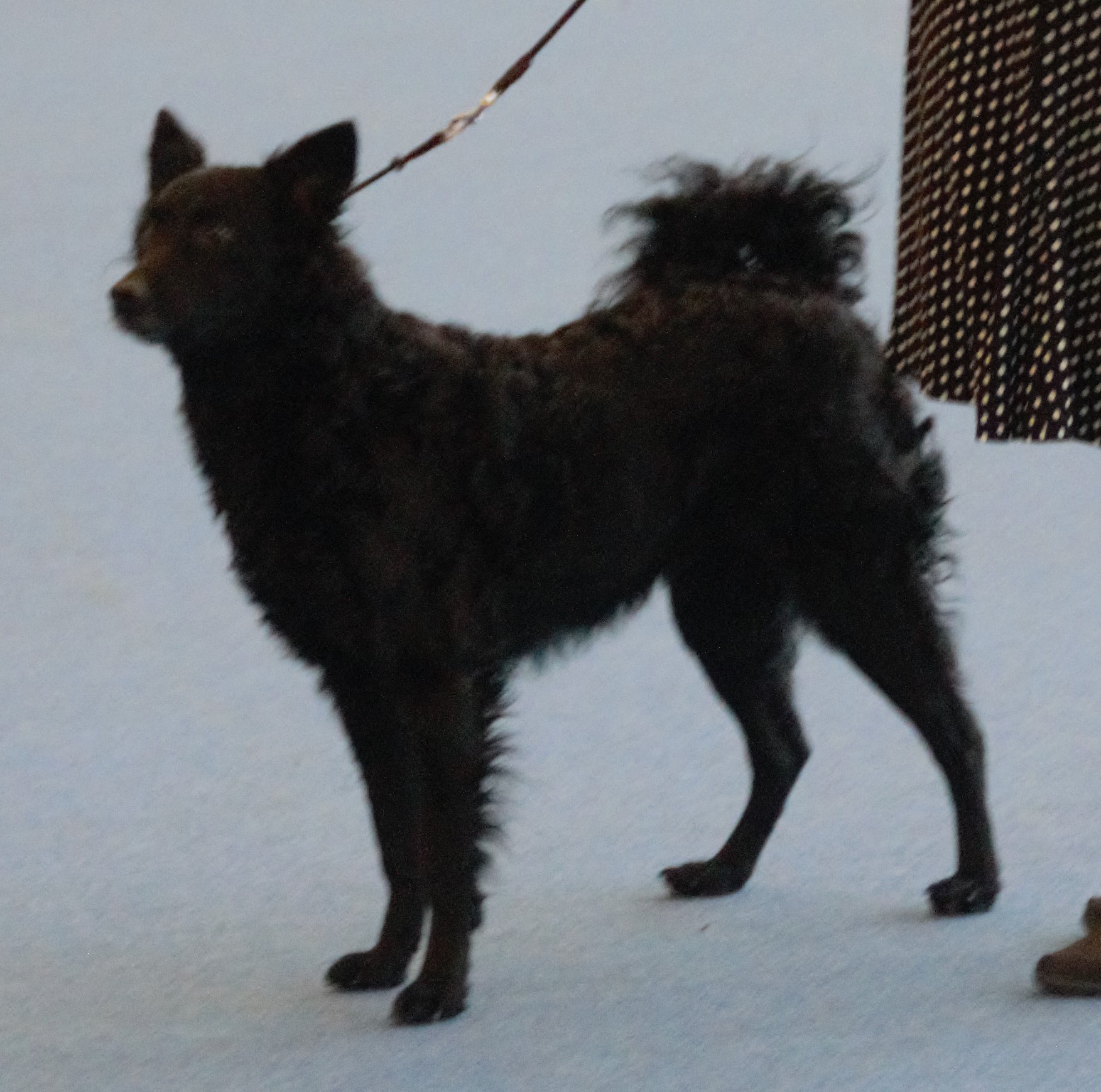
The dense black jacket combines wavy or curly outer hair with compact soft undercoat. The face, ears and fronts of the legs carry shorter hair, while the neck, rear and tail may be much more furnished. Natural tail lengths can vary; appearance is not an instruction for cosmetic alteration.
A lively worker with individual needs
The standard emphasises attentiveness, devotion and herding ability alongside courage and endurance. Those qualities help explain the need for rewarding activity and opportunities to settle. They do not establish an individual dog's confidence with unfamiliar people, animals or grooming equipment.
Care through the double coat
Loose hair and trapped debris can hide beneath a wavy surface. Check behind ears, under equipment and around the rear gently, allowing manageable breaks. A groomer can help plan maintenance suited to the actual coat and household routine; pain or persistent irritation needs veterinary advice.
Plan comfortable care
Our gentle coat-care guide and first grooming appointment guide help you prepare questions about handling, maintenance and a suitable service. This breed profile is independent of named businesses.
Photograph and sources
The photograph illustrates one Croatian Shepherd Dog. See the linked credit for its creator, source and reusable licence. It does not establish the dog's health, age or temperament.
Read the FCI catalogue entry and FCI breed standard. General care and handling guidance is available from PDSA and Dogs Trust.