
Sicily written into the breed's story
The Cirneco's history is closely associated with Sicily and the volcanic terrain around Mount Etna. The FCI points to ancient representations on coins and other objects as evidence of the island's long connection with this type of dog.
Its account also discusses possible Mediterranean and Egyptian connections. These are historical interpretations, rather than proof of an unbroken pedigree from a particular ancient dog. The modern breed has its own FCI identity, number 199.
More than a silhouette
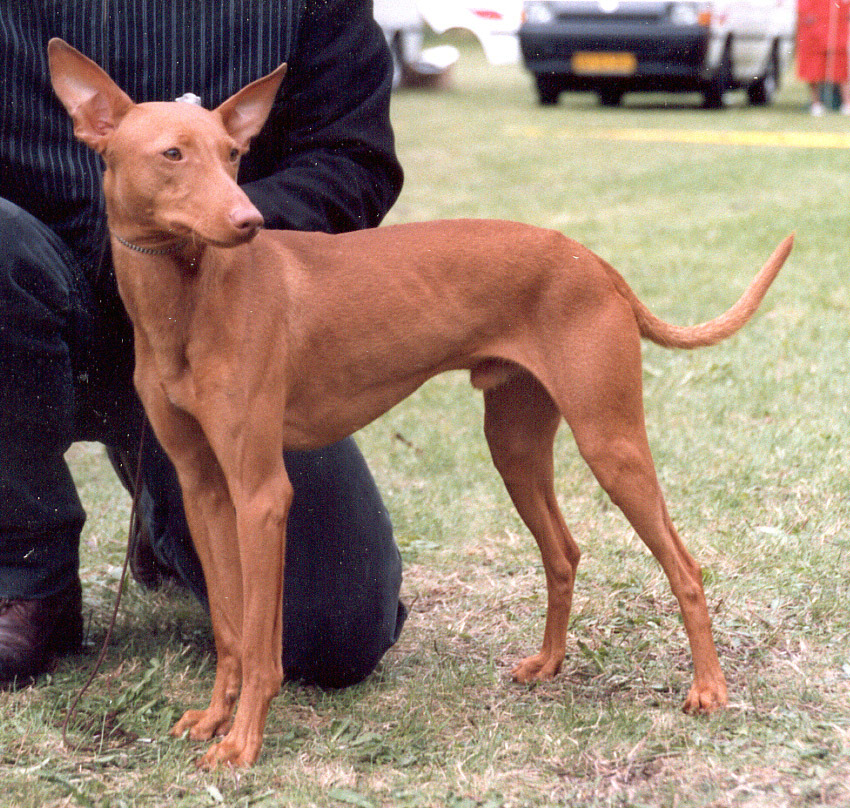
Upright ears, a fine coat and an elegant but strong body create a distinctive outline. Although a photograph can suggest a small sighthound, the standard specifically describes a hunting method centred on scent. Sight helps choose a route and hearing helps locate hidden movement.
Determination in everyday life
Working independently among rocks calls for persistence and attention. At home, provide enjoyable scent games, reward-based training and safe opportunities to move. Do not assume reliable recall or compatibility with small pets from the breed's affectionate description.
Care in daily life
A gentle wipe and soft grooming tool can help monitor the short coat without abrading the skin. Check feet after rough walks and check where equipment contacts the body. Keep handling brief and positive; obtain veterinary advice for painful skin, a limp or a wound that needs attention.
Plan comfortable care
Our gentle coat-care guide and first grooming appointment guide help you prepare questions about handling, maintenance and a suitable service. This breed profile is independent of named businesses.
Photograph and sources
The photograph illustrates one Cirneco dell'Etna. See the linked credit for its creator, source and reusable licence. It does not establish the dog's health, age or temperament.
Read the FCI catalogue entry and FCI breed standard. General care and handling guidance is available from PDSA and Dogs Trust.