
A retriever named for its working landscape
The Chesapeake Bay Retriever developed around the Chesapeake Bay in the United States for retrieving waterfowl. The FCI's account puts demanding water and weather conditions at the centre of its working description. This geographical connection is a useful starting point for understanding the breed's muscular build and distinctive jacket.
A harsh, wavy outer coat and woolly undercoat form part of that practical selection story. They should not be turned into an unlimited claim that every modern individual can work safely in ice or rough water. A breed standard describes an ideal type; a dog's actual health, fitness and experience still need assessment.
Not every brown retriever wears the same coat
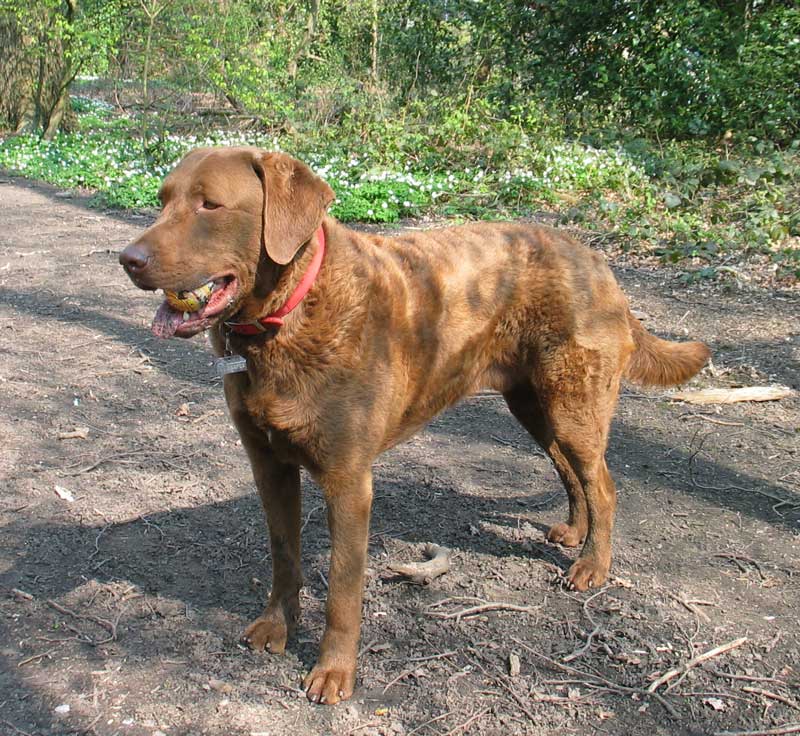
The standard recognises brown, sedge and deadgrass shades, without preferring one over another. Waves are concentrated in particular areas rather than forming a long curly coat everywhere. Those details help distinguish the intended texture from another retriever or a spaniel's furnishings.
The standard's willing, alert and affectionate character language is best used to frame questions about the individual. Ask about visitors, other animals, settling and responses to close contact. A familiar working reputation is not a substitute for patient teaching or observation.
Respect the texture, assess the skin
Talk to a professional about what the coat actually needs and what the owner can maintain comfortably. A natural oiliness described in the standard is different from an unexplained skin change. Persistent soreness or irritation belongs with a vet rather than repeated cosmetic washing.
The licensed natural photograph is identified as a Chesapeake Bay Retriever and shows one brown dog outdoors. It cannot establish working fitness or water confidence. United States of America is the recorded origin here, while the Bay is the landscape associated with its development rather than a statement about where most Chessies now live.
Plan comfortable care
Our gentle coat-care guide and first grooming appointment guide help you prepare questions about handling, maintenance and a suitable service. This breed profile is independent of named businesses.
Photograph and sources
The photograph illustrates one Chesapeake Bay Retriever. See the linked credit for its creator, source and reusable licence. It does not establish the dog's health, age or temperament.
Read the FCI catalogue entry and FCI breed standard. General care and handling guidance is available from PDSA and Dogs Trust.