
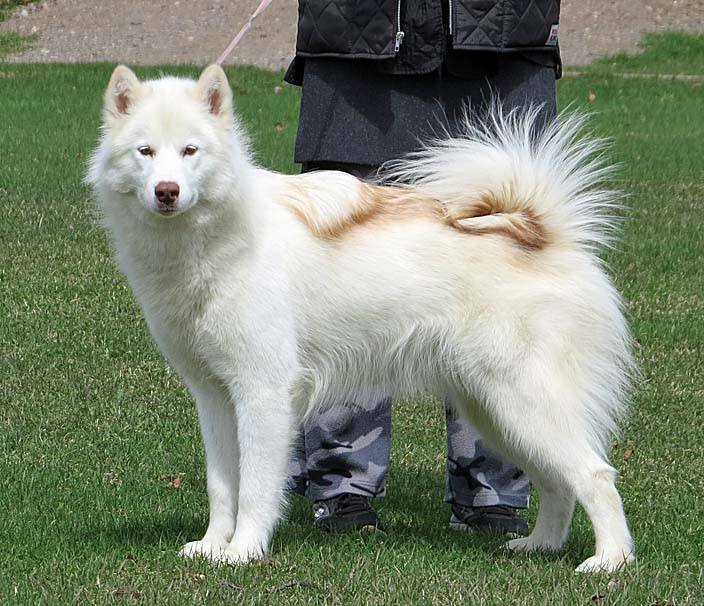
A working relationship in the Canadian Arctic
The Canadian Eskimo Dog is the FCI's catalogue name for a breed also associated with the name Qimmiq. Its story is intertwined with Inuit communities and the practical demands of Arctic travel and work. The standard describes a powerful dog intended for sustained effort rather than a lightly built racing outline.
The modern preservation account includes the Eskimo Dog Research Foundation in the Northwest Territories, using dogs from surviving Inuit-owned populations in Arctic Canada. That documented work is a better anchor than claiming a complete genetic history from distant prehistory. Older terminology in historical standards should be read in its period context.
Substance beneath the winter coat
A thick neck, substantial chest, erect ears and bushy tail create a characteristic spitz outline. Dense winter hair adds to the visual impression of size. A photograph cannot establish how much of an individual dog's outline is coat, body condition or muscle, so ask for an appropriate hands-on assessment when planning care.
This is a serious working-breed background to research before considering ownership. Ask about the particular dog's needs, experience with other animals and safe opportunities for activity. Avoid turning old descriptions of pack roles into advice to dominate or physically confront a dog.
Seasonal care without assumptions
A dense undercoat requires a method that reaches the relevant areas comfortably. Discuss seasonal loose hair and any compacted sections with a professional, with breaks and equipment introduced gradually. A coat built for cold conditions does not supply a general rule about what an individual can safely tolerate in a modern environment.
The licensed natural photograph is explicitly identified as a Canadian Eskimo Dog, also called Qimmiq, and shows a white-coated individual. It is not evidence of temperament or working ability. Canada is the recorded origin; this profile makes no current worldwide population claim.
Plan comfortable care
Our gentle coat-care guide and first grooming appointment guide help you prepare questions about handling, maintenance and a suitable service. This breed profile is independent of named businesses.
Photograph and sources
The photograph illustrates one Canadian Eskimo Dog. See the linked credit for its creator, source and reusable licence. It does not establish the dog's health, age or temperament.
Read the FCI catalogue entry and FCI breed standard. General care and handling guidance is available from PDSA and Dogs Trust.