
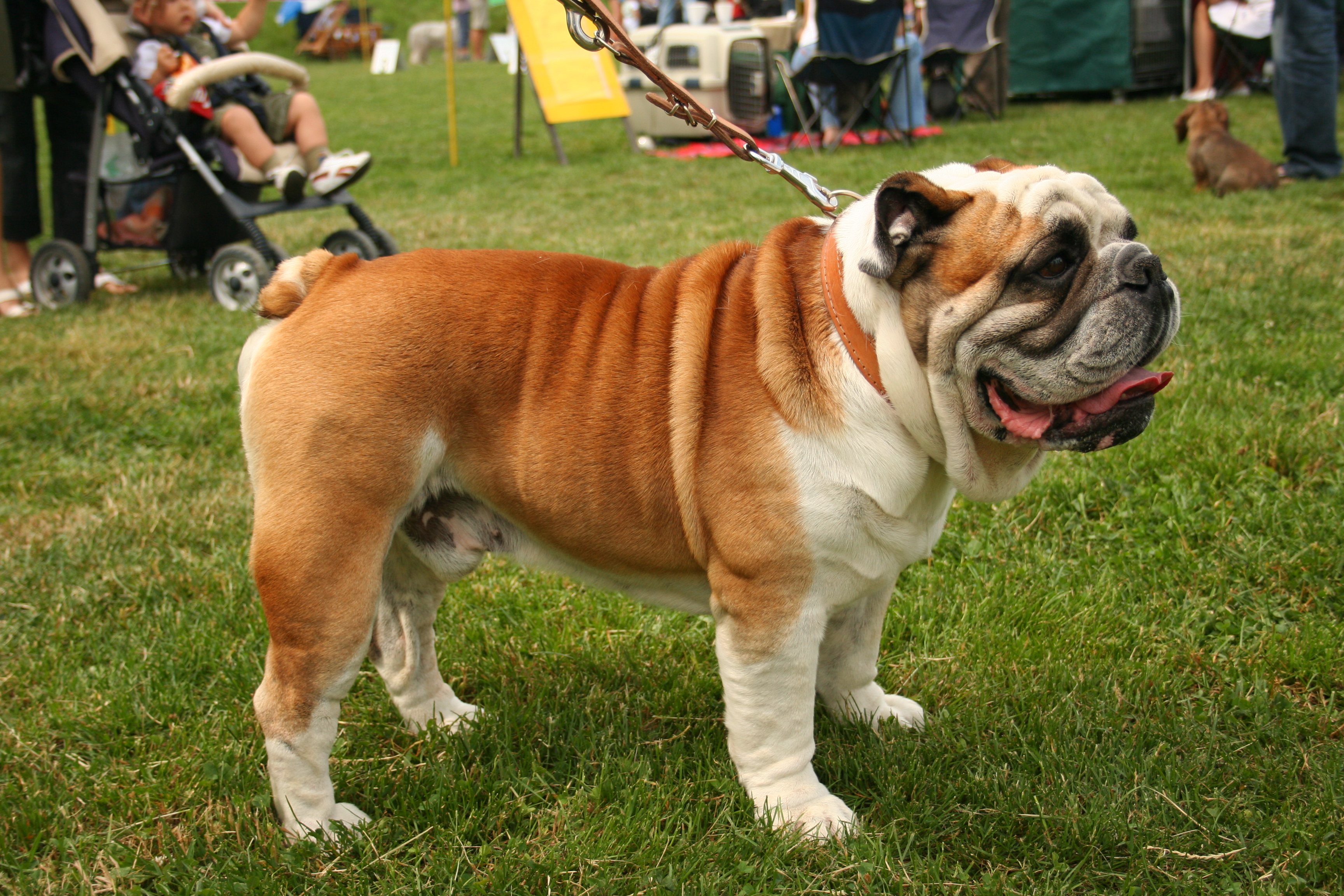
A British breed with a difficult early chapter
The FCI history connects the Bulldog with bullbaiting and describes a change in type after 1835, followed by entry into the show ring in 1860. That past should be understood as history, not celebrated as a model for how a companion dog should live or be handled today.
The present standard calls for a compact, powerful dog without exaggeration that interferes with movement. Importantly, its current appearance section rejects respiratory distress and excessive breathing noise. A familiar silhouette is not a reason to accept avoidable difficulty as simply part of the breed.
Look beyond the expressive face
A broad head, relatively short muzzle and low, substantial body make the Bulldog recognisable. Individual dogs still vary in health, confidence and activity. Ask practical questions about comfortable walking, resting, handling and what veterinary advice is already in place before choosing a routine.
PDSA explains that BOAS can affect flat-faced dogs and that heat can make breathing difficulties more dangerous. Do not dismiss noisy breathing as a harmless character trait. Seek veterinary advice about concerns and urgent help for sudden difficulty; a breed profile or groomer cannot diagnose the cause.
Care should protect comfort
Agree the grooming plan before the appointment, including breaks, positioning and any relevant veterinary restrictions. Explain previous reactions to equipment and close handling. A short coat may need only modest cosmetic work, while the individual dog's comfort still requires careful attention.
The licensed natural photograph shows one Bulldog at an outdoor event. It is an illustration of breed appearance, not proof of healthy breathing or an ideal body condition. Great Britain is the recorded origin here. The linked Royal Kennel Club grading scheme provides additional primary information about assessing respiratory function.
Plan comfortable care
Our gentle coat-care guide and first grooming appointment guide help you prepare questions about handling, maintenance and a suitable service. This breed profile is independent of named businesses.
Photograph and sources
The photograph illustrates one Bulldog. See the linked credit for its creator, source and reusable licence. It does not establish the dog's health, age or temperament.
Read the FCI catalogue entry and FCI breed standard. General care and handling guidance is available from PDSA and Dogs Trust.
Additional primary reading: PDSA: BOAS and flat-faced dogs · Royal Kennel Club: Respiratory Function Grading Scheme.