
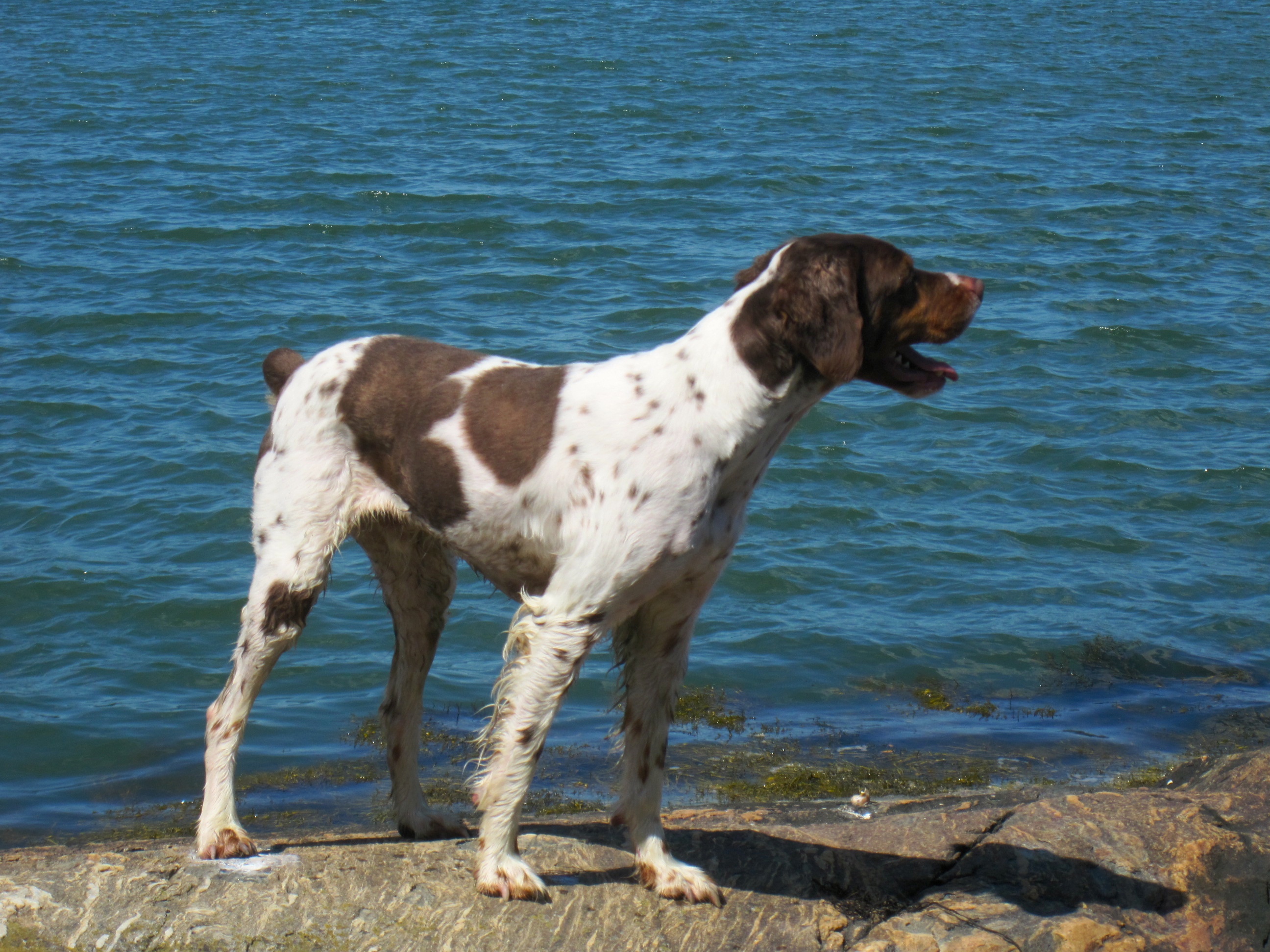
Brittany in name and history
The FCI places the Epagneul Breton in central Brittany, France. Its account describes selection and outcrossing during the early twentieth century, with a draft standard prepared at Nantes in 1907 and adopted at Loudeac in 1908.
Brittany is a familiar English name for FCI breed 95. Although often called Brittany Spaniel, its classification is among pointing dogs. That working distinction helps readers understand the breed without assuming it behaves like every flushing spaniel.
A fine coat and compact working outline
The coat lies close and is fine without being silky or curly. Longer hair behind the limbs contrasts with the short face and leg fronts. White with liver, orange or black markings can occur in several patterns, so the photographed dog is only one example of the breed's appearance.
Attention needs a useful partnership
The standard highlights searching, scent ability, pointing and retrieving. Give a companion dog safe opportunities to investigate and learn while rewarding returning attention to the handler. A sociable description does not replace gradual introductions, quiet rest or management around wildlife.
After a wet or brushy walk
Feel gently through the furnishings and check between the toes for debris. Inspect ear surfaces without inserting tools. Introduce a stable grooming surface and small rewarded handling steps, and agree a practical maintenance plan before tangles or unfamiliar procedures make care difficult.
Plan comfortable care
Our gentle coat-care guide and first grooming appointment guide help you prepare questions about handling, maintenance and a suitable service. This breed profile is independent of named businesses.
Photograph and sources
The photograph illustrates one Brittany. See the linked credit for its creator, source and reusable licence. It does not establish the dog's health, age or temperament.
Read the FCI catalogue entry and FCI breed standard. General care and handling guidance is available from PDSA and Dogs Trust.