
A French sheepdog beyond the familiar fringe
The Briard appears in the FCI catalogue as the Berger de Brie. Its history belongs to French lowland sheepdogs selected for moving and protecting livestock. The FCI account records the name chien de Brie in Abbé Rozier's agricultural work in 1809, giving a useful documented point in a much longer working-dog story.
Its later history includes service with the French army during both world wars, including sentry work and finding wounded people. That history explains something of the breed's reputation, but it is not evidence that a present-day dog has particular skills without learning and experience.
Meet the individual underneath the hair
The standard describes a muscular, supple and alert dog. Ask what a particular Briard enjoys, how it settles and how it responds when unfamiliar people approach. A striking coat can attract attention from strangers; an owner still needs to recognise whether the dog welcomes that attention.
Grooming involves close contact with places a dog may not expect to be handled. Introduce brushing, feet and equipment gradually. Tell the professional what the dog already knows and where it needs more time, rather than expecting the reputation of a confident working breed to make every task easy.
A long coat needs a workable agreement
Discuss the dog's actual coat, skin, chosen length and home routine before deciding on a finish. Comfort is easier to protect when the owner understands what maintenance involves and seeks help before tangles become tight. A show photograph is a reference for appearance, not a safe grooming instruction.
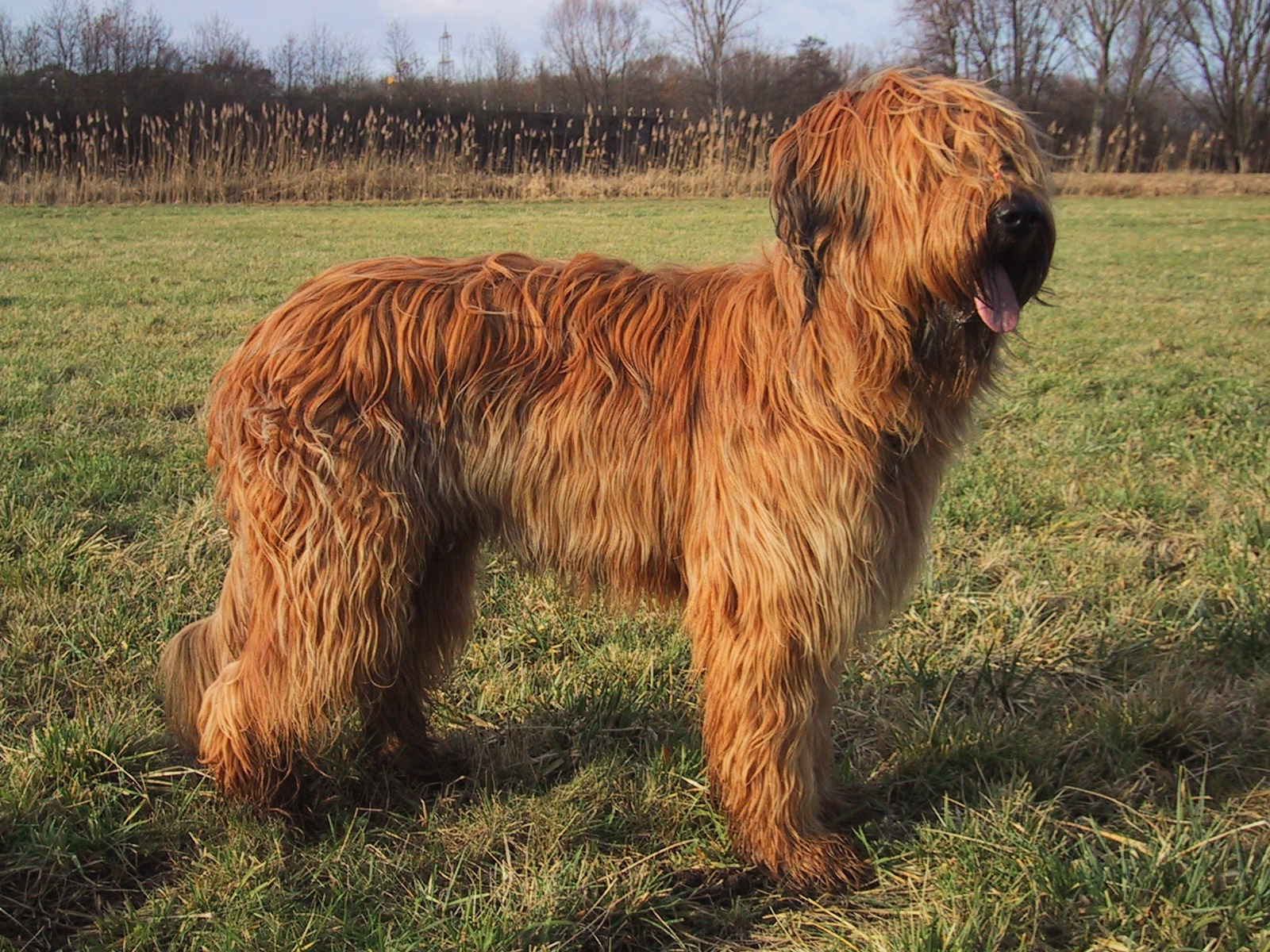
The licensed photograph shows a fawn Briard outdoors, with the long coat and covered face visible. It illustrates one individual and one presentation. France in the origin filter describes breed development; this page does not claim where most Briards live today.
Plan comfortable care
Our gentle coat-care guide and first grooming appointment guide help you prepare questions about handling, maintenance and a suitable service. This breed profile is independent of named businesses.
Compare breed stories
Photograph and sources
The photograph illustrates one Briard. See the linked credit for its creator, source and reusable licence. It does not establish the dog's health, age or temperament.
Read the FCI catalogue entry and FCI breed standard. General care and handling guidance is available from PDSA and Dogs Trust.