
From a hunting ancestor to a versatile companion
The Boxer's history reaches back to the Bullenbeisser, a German hunting dog used to hold large game. The FCI identifies the smaller Brabant type as an immediate ancestor. The Royal Kennel Club describes possible Bulldog influence in the development of the modern breed, rather than a completely certain family tree. Later roles included tracking and military work, as well as life as a companion. The official FCI name Deutscher Boxer refers to the same breed usually called the Boxer in English. Its German origin is a record of development, not a claim about where most Boxers live today.
Living with the individual dog
The breed standard describes an alert, confident dog that can be playful with its household. Those are broad tendencies, not an assurance that any particular dog will be easy to handle. Give an energetic companion useful ways to learn, comfortable exercise and time to settle. Reward a calm greeting before excitement becomes a wrestling match. Introduce visitors and unfamiliar dogs at a pace the individual can manage, with space to step away.
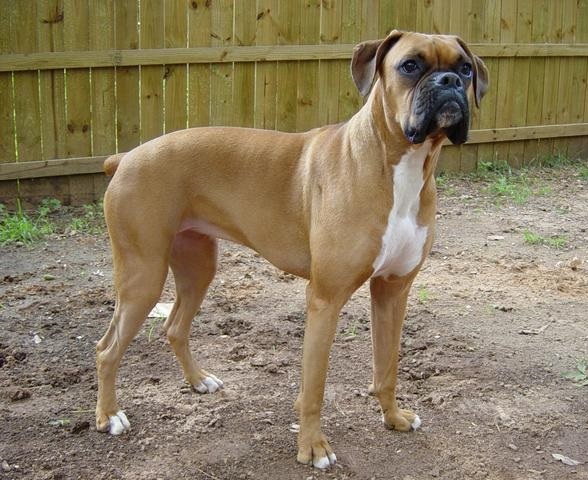
About the photograph: An older natural photograph of the female Boxer Isabella Princesa. It shows one individual; the current FCI standard describes a natural-length tail.
Further reading: Royal Kennel Club Boxer guide and breed history.