
An American companion with English ancestors
The Boston Terrier's name points to the city where the modern breed took shape, rather than to every part of its ancestry. American Kennel Club histories trace an important founding dog, Judge, to a Bulldog and white English Terrier cross brought from Liverpool to Boston in the nineteenth century. Breeders in Massachusetts developed a smaller companion from that background. The Boston Terrier Club of America dates from 1891; AKC recognition followed in 1893. The story helps explain the combination of a sturdy outline and the breed's strong association with an American city. It does not mean that a modern pet is a fighting dog, or that ancestry predicts an individual's behaviour.
Despite the word Terrier in its name, the FCI places the Boston in Group 9, Companion and Toy Dogs; the Royal Kennel Club uses its Utility group. Those are different catalogue systems, not two different breeds. The origin filter here follows the FCI's United States record. It describes development of the breed, not a survey of where the world's Boston Terriers live today.
Living with the individual dog
A Boston may be small enough to fit neatly beside you, but plan around the dog rather than the space on the sofa. Ask a rescue or breeder about the particular dog's experience of people, other animals, being left alone and handling. Give play and learning a place in the day, alongside quiet opportunities to settle. Short reward-based sessions can make everyday tasks such as putting on walking equipment and showing a paw easier to practise without a struggle.
The short muzzle needs more attention than a neat coat might suggest. PDSA identifies breathing and eye problems as important welfare concerns in this breed, while Cambridge's veterinary BOAS guidance explains the risks associated with shortened airways. Avoid exercising in the heat of the day and discuss suitable activity with your vet. Noisy or difficult breathing should not simply be accepted as a cute breed trait. A photograph and a breed description cannot assess an individual dog's airway or eyes. Tell a groomer about breathing difficulties, previous reactions to heat or stress, and any veterinary advice before agreeing an appointment.
Plan a comfortable care routine
Our gentle coat-care guide explains home care and when to ask for professional help. Use the first appointment guide to prepare questions about handling, coat condition and a suitable visit.
About the photograph and sources
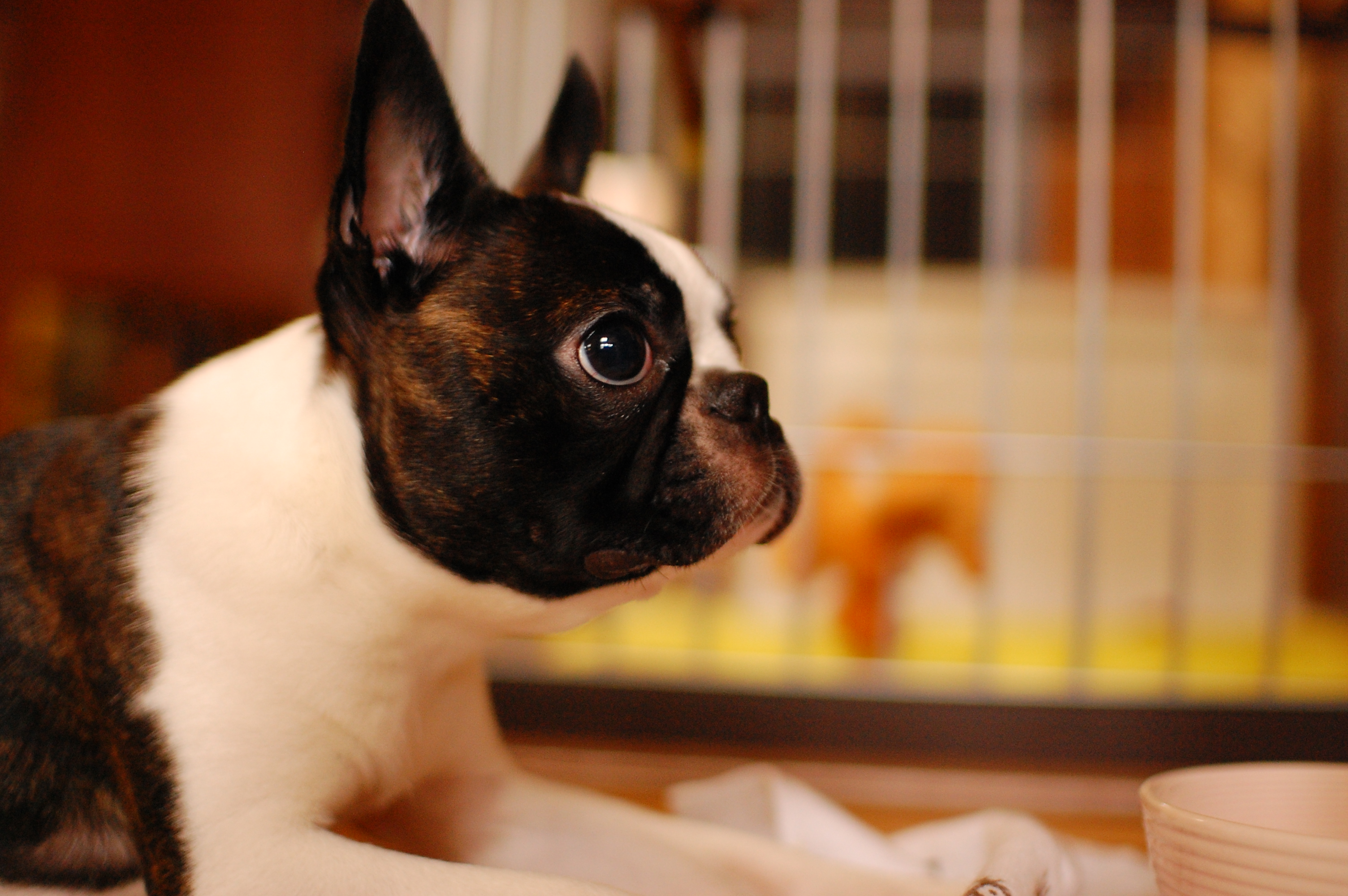
This natural indoor portrait shows one brindle-and-white Boston Terrier. It illustrates the head, upright ears and short coat, rather than every colour or the whole body. Its appearance is not evidence that this individual has healthy breathing or eyes.
Further reading: Royal Kennel Club Boston Terrier guide; American Kennel Club breed guide; PDSA grooming guidance; Dogs Trust handling guidance. For breathing and heat concerns, see PDSA Boston Terrier welfare guidance and Cambridge veterinary BOAS information.