
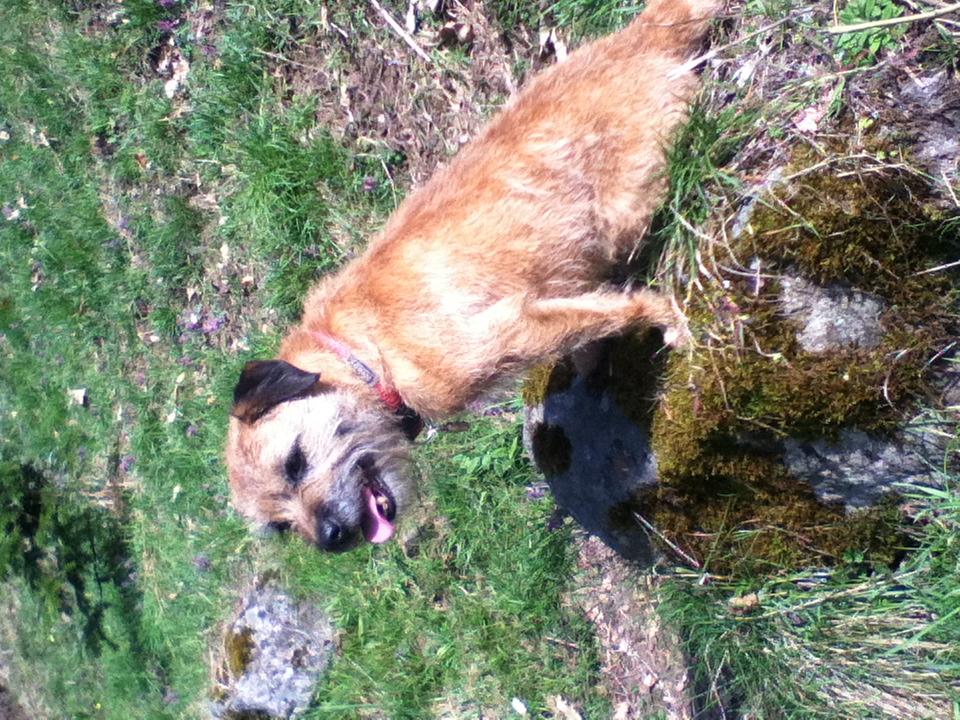
A border-country dog with a working past
The Border Terrier's story begins in the country between England and Scotland. These were working terriers, developed to accompany hunts and pursue quarry rather than to carry an elaborate show coat. The Royal Kennel Club records earlier local names including Reedwater Terrier and Coquetdale Terrier, and connects the later Border name with the Border Foxhounds. That history helps explain the combination of a compact body and an energetic outlook.
The face is often the first thing people notice. The British standard compares the head with an otter's: a moderately broad skull, a short, strong muzzle and small ears folding forward. Its dense, rough coat completes a practical-looking outline. Those descriptions are a way to understand the breed, not a checklist for judging the health or worth of a pet.
Great Britain is the origin recorded in the FCI catalogue, where the Border Terrier is breed number 10 in Group 3, Terriers. Origin describes the breed's development; it does not tell us which country has the largest population today. This profile does not infer worldwide numbers from club membership, popularity claims or photographs.
A small companion with plenty to notice
A Border may be an affectionate companion and still become intensely interested in a squirrel or an intriguing scent. The American Kennel Club's account connects present-day instincts with the breed's earlier hunting work. Plan for that possibility before an outing: choose a suitable lead and secure exercise space, and make boundaries part of everyday management.
Look beyond a general breed label when meeting a dog. Ask how they respond to visitors, other animals, grooming tools and quiet time at home. Their age, previous experience and learning matter. A reputation for friendliness cannot replace a careful introduction, and a small body does not mean that every dog wants to be picked up or held still.
There is room for enjoyable learning alongside activity. Dogs Trust recommends building confidence with handling gradually, using rewards and returning to an easier step if a dog becomes worried. A brief, comfortable encounter with a brush is a better starting point than insisting on completing a whole grooming session.
Understand the wiry jacket before choosing a groom
The coarse topcoat and closer undercoat have different textures. Regular brushing helps remove loose hair, but brushing, clipping and hand stripping are different tasks. The Southern Border Terrier Club describes hand stripping as the traditional way of maintaining the outer coat's texture. Its guidance also explains why clipping changes the coat's appearance and texture.
That distinction is useful when talking to a groomer; it is not an instruction to pull at a coat yourself. Ask about their experience with Borders, how they assess readiness and comfort, and exactly which method they propose. Breed-club timetables describe common practices, not an appointment interval that fits every pet. Agree the plan around the dog's coat and needs, including any veterinary advice.
PDSA recommends advice specific to the animal and a positive introduction to grooming. If brushing becomes painful, a knot is tight to the skin or the skin looks irritated, stop and seek suitable professional help. The aim is comfortable everyday care, rather than making an individual dog look identical to a photograph.
Plan comfortable care
Our gentle coat-care guide and first grooming appointment guide help you prepare questions about handling, maintenance and a suitable service. This breed profile is independent of named businesses.
Photograph and sources
The photograph illustrates one Border Terrier. See the linked credit for its creator, source and reusable licence. It does not establish the dog's health, age or temperament.
Read the FCI catalogue entry and FCI breed standard. General care and handling guidance is available from PDSA and Dogs Trust.
Additional primary reading: Royal Kennel Club breed history · Southern Border Terrier Club coat guidance · Royal Kennel Club breed standard.