
From northern spaniels to a defined breed
The FCI history recalls nineteenth-century descriptions of black or black-and-white spaniels in Picardy, sometimes called spaniels of the North. A distinct Blue Picardy category developed in the early twentieth century and its standard was registered in 1938.
The Blue Picardy is FCI number 106, separate from the Picardy Spaniel at number 108. Their regional connection is close, but their coat colours are a principal distinction. Neither should be illustrated with the other's photograph.
What makes the coat look blue
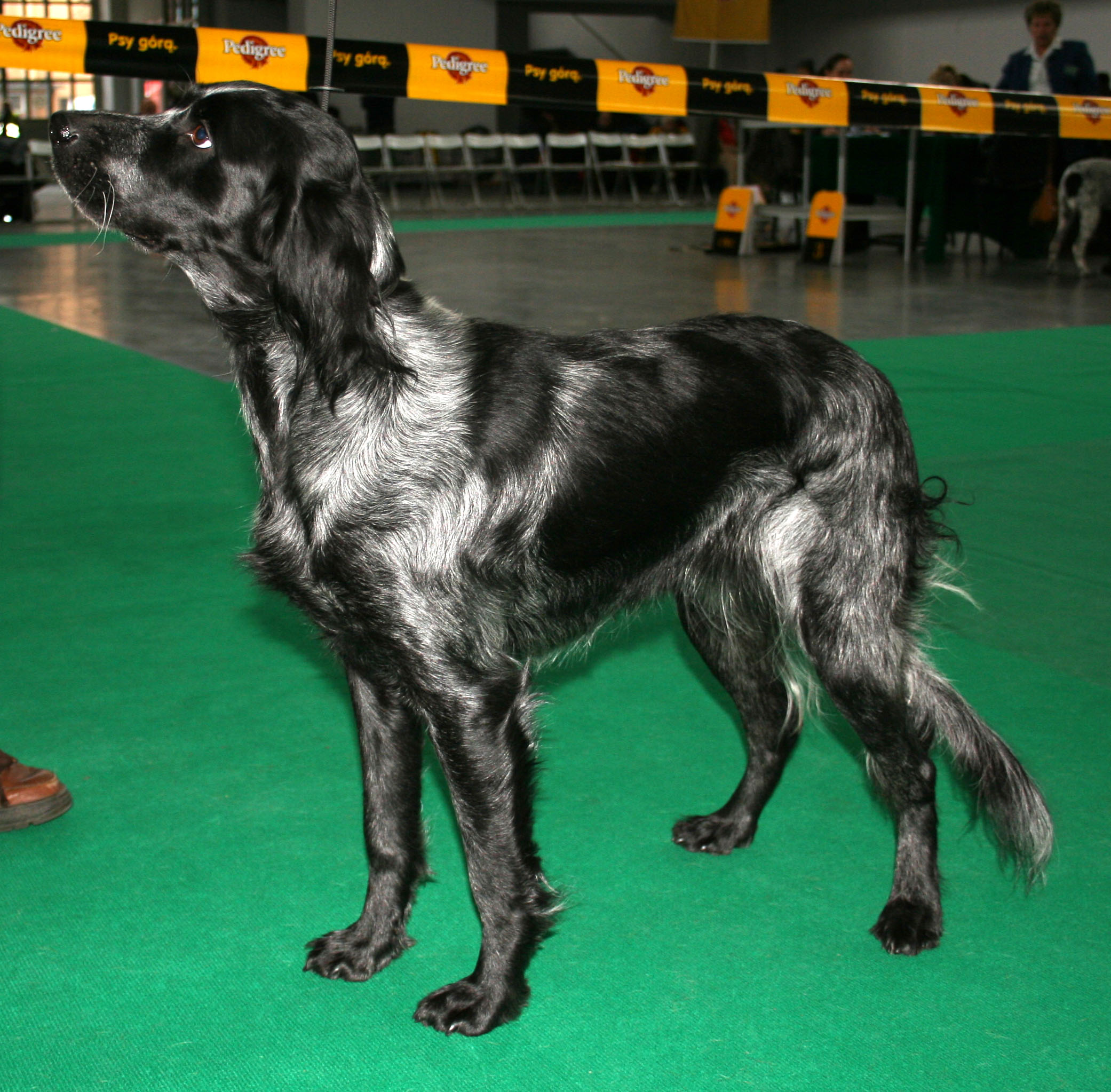
The overall blue-grey impression comes from the pattern of black and white hair and speckling, rather than a single uniform blue pigment. Longer hair furnishes the ears, legs and tail, while the body coat remains flat or slightly wavy. The outline is that of a practical continental pointing spaniel.
Keeping contact, learning calmly
The standard describes a dog working in contact with its handler, with particular historical use on small game. Gentle, rewarding training and suitable exploration can reflect that background. Watch the individual dog's confidence and recovery from excitement rather than treating a calm breed ideal as a guarantee.
Furnishings after field walks
Part the longer hair around ears, chest and legs to find seeds or small tangles. Remove light debris carefully and avoid dragging through compacted knots. A practical maintenance plan can preserve a comfortable coat without asking the dog to tolerate unnecessary pulling or an excessively long appointment.
Plan comfortable care
Our gentle coat-care guide and first grooming appointment guide help you prepare questions about handling, maintenance and a suitable service. This breed profile is independent of named businesses.
Photograph and sources
The photograph illustrates one Blue Picardy Spaniel. See the linked credit for its creator, source and reusable licence. It does not establish the dog's health, age or temperament.
Read the FCI catalogue entry and FCI breed standard. General care and handling guidance is available from PDSA and Dogs Trust.