
Saint-Hubert and the scent-hound tradition
The FCI records Belgium as the Bloodhound's origin and uses the name Chien de Saint-Hubert. Its account links development with hounds bred by monks at the Abbey of Saint-Hubert in the Ardennes, followed by a substantial history in Britain. The association is an introduction to a working tradition, not a complete individual pedigree.
Later history includes the use of these dogs in the United States to pursue people escaping enslavement, recorded in the FCI account alongside other tracking work. Those uses describe what people trained dogs to do in particular historical circumstances. They do not predict the behaviour or experience of an individual modern companion.
An expressive face should not mean exaggeration
The standard describes a large, substantial hound with long ears and supple skin folds. It also warns that features must not be exaggerated in ways that damage health or welfare. A solemn expression or deep fold is not evidence that an individual is relaxed or comfortable.
Ask practical questions about scent interest, secure exploration, settling and reactions to touch. A favourable temperament description cannot replace an account of the particular dog's experiences. Close handling around the head and ears should be introduced patiently rather than assumed to be welcome.
Keep the care plan individual
A groomer can help with coat maintenance and accessible checks, while persistent skin or ear concerns need a vet. Explain any pain, sensitivity or previous difficulty before an appointment. More cleaning or firmer restraint is not an appropriate answer to an unexplained change in comfort.
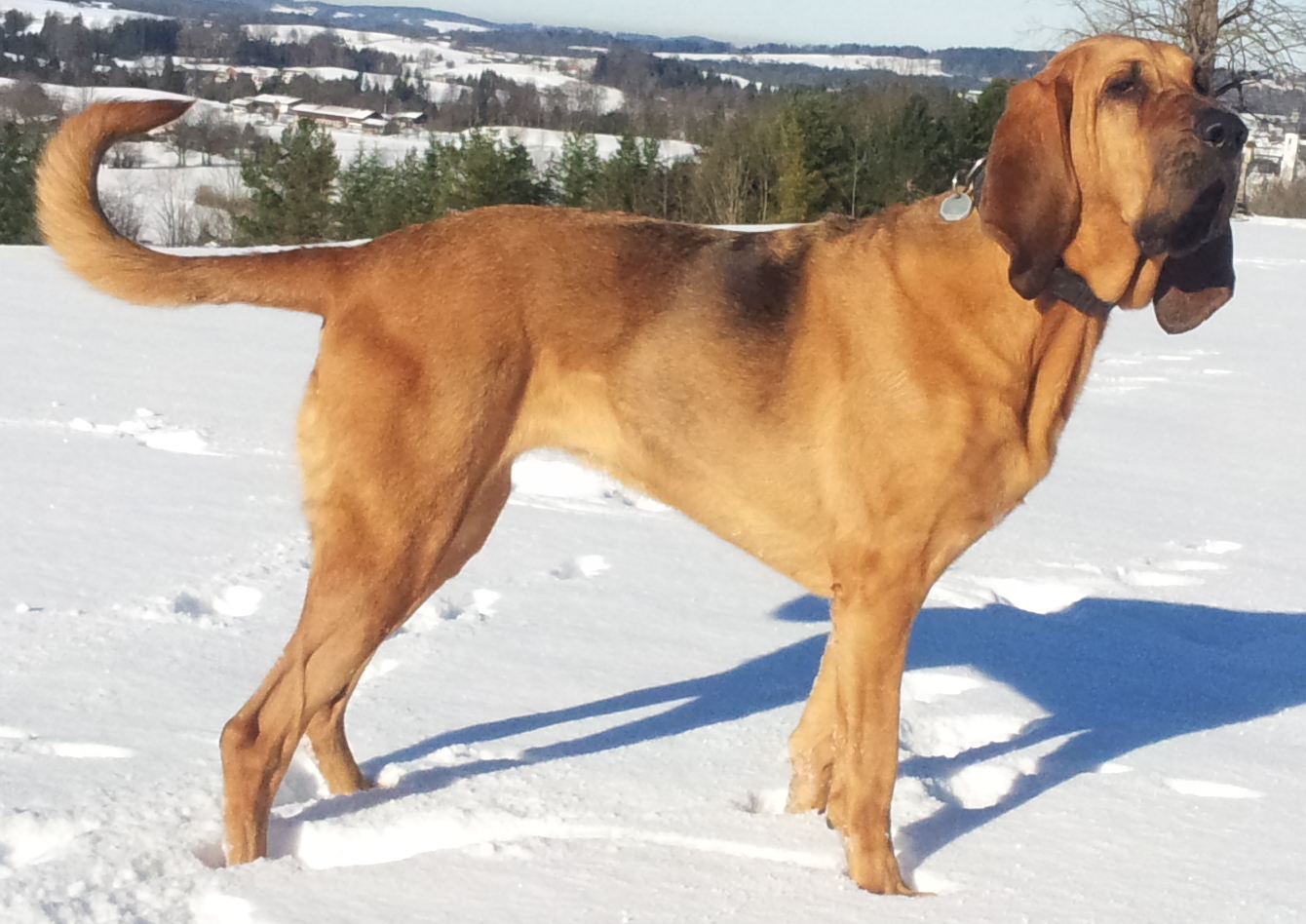
The licensed natural photograph is identified as a Bloodhound and shows one red-coated individual outdoors. It does not establish a tracking qualification or medical condition. Belgium is the catalogue origin; the breed's later development elsewhere should not be confused with a measured worldwide population claim.
Plan comfortable care
Our gentle coat-care guide and first grooming appointment guide help you prepare questions about handling, maintenance and a suitable service. This breed profile is independent of named businesses.
Photograph and sources
The photograph illustrates one Bloodhound. See the linked credit for its creator, source and reusable licence. It does not establish the dog's health, age or temperament.
Read the FCI catalogue entry and FCI breed standard. General care and handling guidance is available from PDSA and Dogs Trust.