
A companion whose name changed with its story
The FCI account describes the Bichon Frise arriving in France from Italy during the Renaissance. Its name developed from barbichon, a reference to a small Barbet-like dog. Historical paintings of little companions provide context for the breed's place in European life, without establishing a complete modern pedigree.
The modern catalogue records Belgium and France as the countries associated with the breed. French and Belgian enthusiasts helped re-establish a population after the world wars. The standard notes the current French name, Bichon à poil frisé, in 1978 and its Franco-Belgian recognition. The coat description is part of that identity, rather than a promise that every dog looks like a sculpted show example.
Learn the companion's own routine
A reputation for sociability is useful background, but a prospective owner needs to ask what the individual has actually experienced. Discuss visitors, time alone, other animals, quiet rest and grooming. A small companion still needs room to communicate uncertainty or a wish for space.
Gentle familiarisation can make maintenance less surprising. Introduce tools, a stable surface and brief contact around feet and face in manageable steps. Share any previous difficulty with the groomer so the appointment can be planned around the dog rather than a fixed expectation of how a Bichon should behave.
Look beneath the rounded outline
The curls and undercoat make coat condition an important part of everyday care. Discuss a manageable finish before choosing a hairstyle, and ask how much maintenance it involves. Comfortable skin and achievable home care matter more than reproducing a photograph's exact shape.
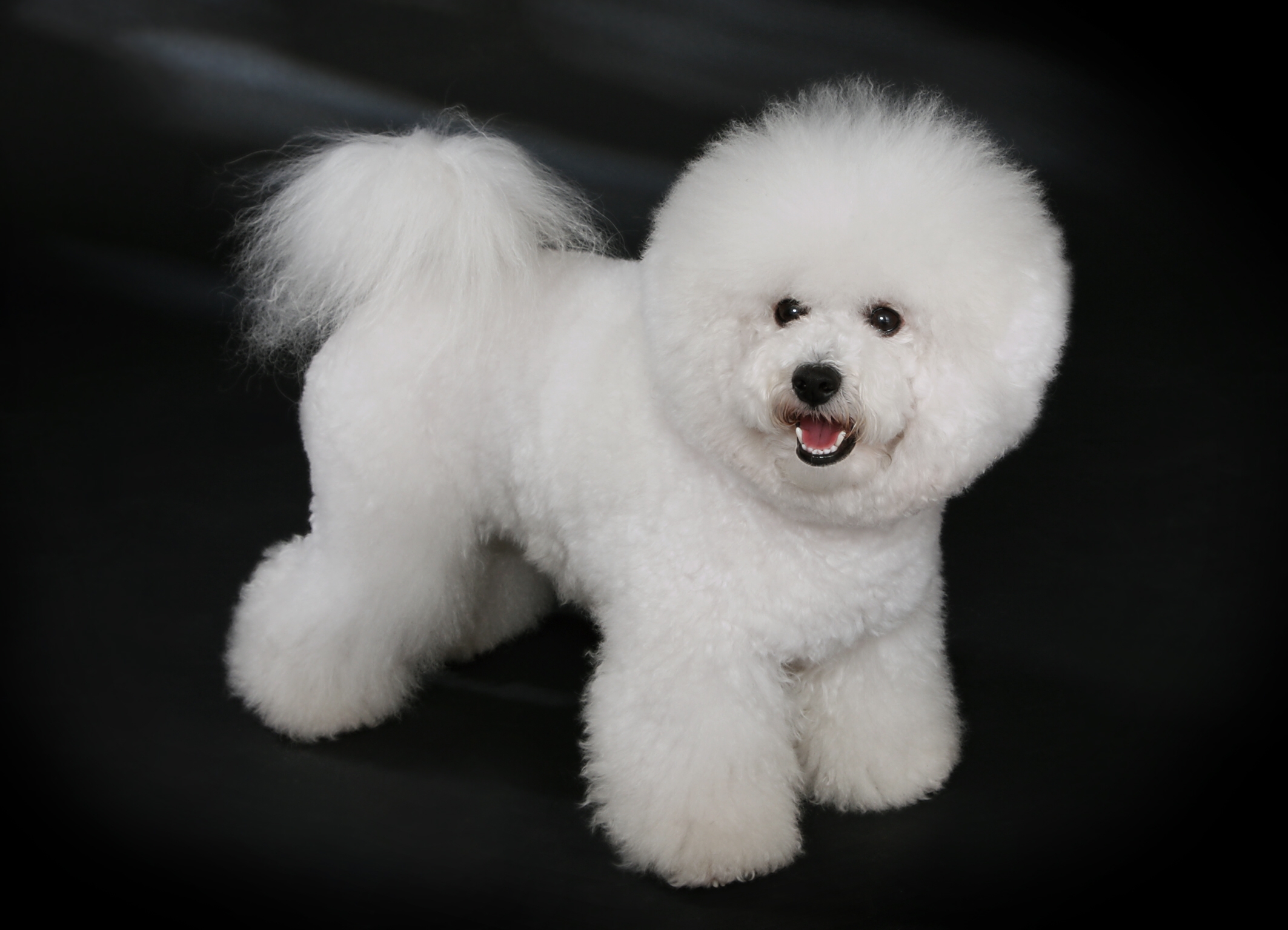
The licensed natural studio photograph shows an individual Bichon Frise in a rounded groom. It illustrates one presentation and cannot establish health, age or temperament. The origin filter records Belgium and France; the profile makes no claim about present-day worldwide numbers.
Plan comfortable care
Our gentle coat-care guide and first grooming appointment guide help you prepare questions about handling, maintenance and a suitable service. This breed profile is independent of named businesses.
Compare breed stories
Photograph and sources
The photograph illustrates one Bichon Frise. See the linked credit for its creator, source and reusable licence. It does not establish the dog's health, age or temperament.
Read the FCI catalogue entry and FCI breed standard. General care and handling guidance is available from PDSA and Dogs Trust.