
A French trail and a British breed
The Basset Hound looks as though it has been drawn close to the ground, but that outline belongs to a working story. It developed as a scent hound able to follow a trail steadily rather than win a sprint. The modern FCI record lists Great Britain as its country of origin; that is not a denial of its French ancestry. The Royal Kennel Club traces imports of hounds from Artois and Normandy into England in the 1860s, followed by Everett Millais’s important breeding work in the 1870s. An imported hound named Model helped shape the English type, with Beagle and Bloodhound influence in its development. The Basset Hound Club followed in 1884. This is a history of a breed being developed across the Channel, not evidence of where most Basset Hounds live today. A familiar face in a family home still carries the background of a dog selected to keep working a scent.
Living with the individual dog
Look beyond the long ears and solemn expression when planning everyday life. A Basset is a substantial dog with a low outline, not a lightweight dog simply because its legs are short. The FCI standard places particular importance on free movement, useful clearance above the ground and moderation in skin and other features. More extreme proportions are not the aim. Notice how comfortably the individual dog moves, and discuss a change in mobility or comfort with your vet.
Build walks around age, health and fitness, with opportunities to investigate smells and time to rest afterward. Practise checking in and everyday handling using rewards. Scent-hound heritage is a reason to think carefully about secure walking arrangements; it is not a reason to assume training is impossible or that every dog will behave alike. Ask a breed club or rescue about the particular dog’s habits, voice and experience of company before deciding how it will fit your household.
Plan care around the individual
Use the gentle coat-care guide to think about comfortable handling and the difference between care at home and professional help. Our appointment guide explains useful questions to agree before a visit.
About the photograph and sources
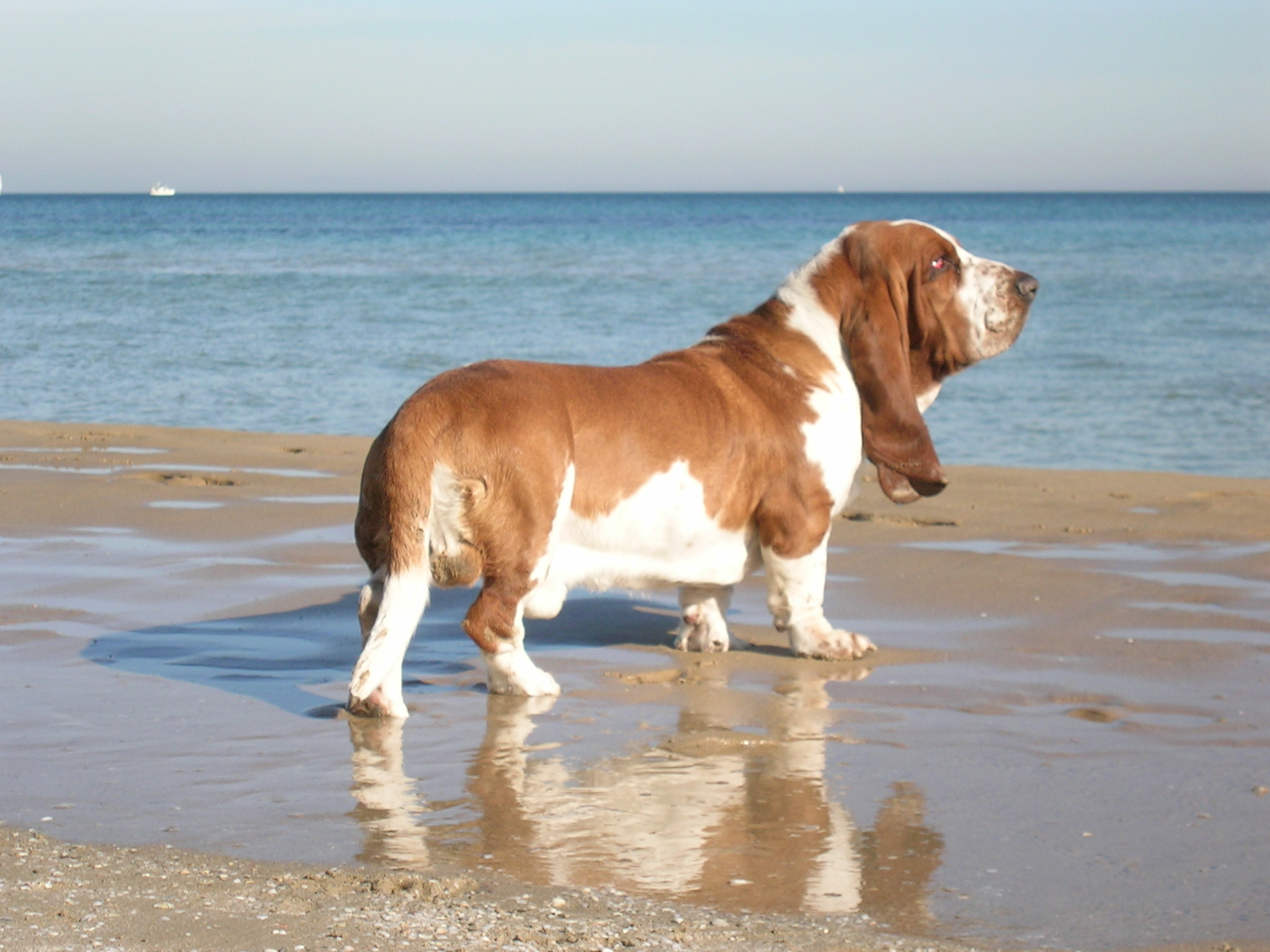
The natural photograph shows a brown-and-white Basset Hound standing on wet sand by the sea. It illustrates one dog and setting, not every accepted colour, an assessment of health or advice about water exercise.
Further reading: Royal Kennel Club Basset Hound history and care guide; American Kennel Club breed guide; PDSA grooming guidance; Dogs Trust handling guidance. Breed origins describe the catalogue history, not a count of dogs living in each country today.