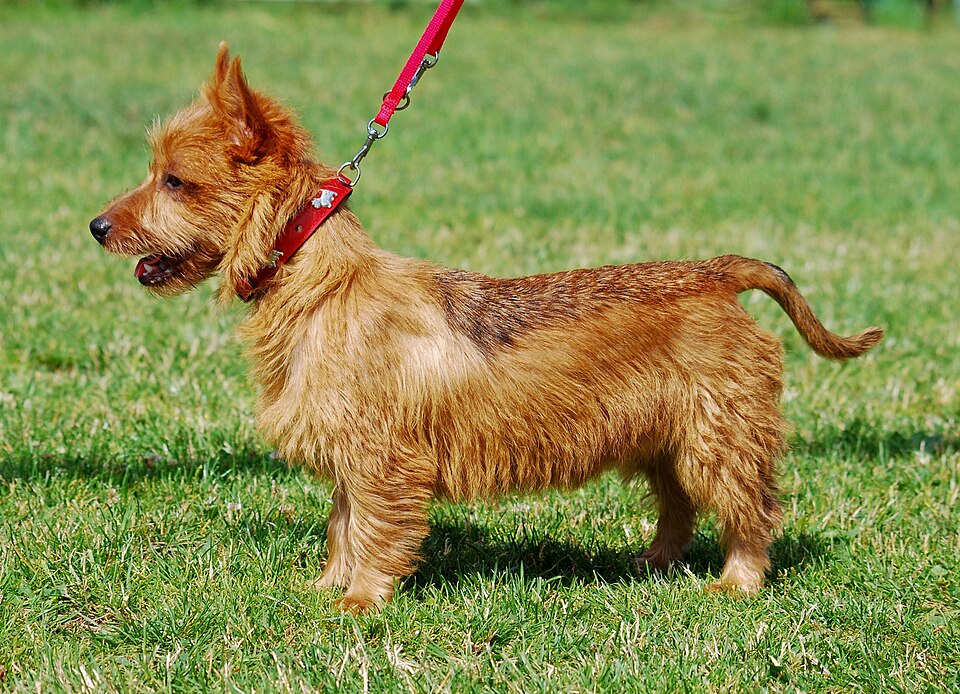
A working companion shaped in Australia
British terrier ancestry travelled to Australia, where a small, adaptable working companion developed in Tasmania, New South Wales and Victoria. The FCI history connects the breed with broken-coated terriers and several British terrier types, while treating parts of the early ancestry as assumptions. Its low outline and rough coat reflect a practical dog developed for demanding surroundings.
Living with the individual dog
Small does not mean ornamental. An Australian Terrier may bring plenty of purpose to a walk or a game, and benefits from chances to investigate safely. A useful first question for a prospective owner is how activity, training and quiet time will fit into an ordinary weekday, rather than how much floor space the dog occupies.
Character and behaviour
The standard combines working-terrier alertness with loyalty and a steady disposition. Those descriptions guide questions; they do not guarantee a particular dog's behaviour around children or other animals.
Breed descriptions are broad tendencies. An individual dog's behaviour also reflects experience, training and circumstances.
Care in daily life
Work gently through the coat and pay attention to the ruff and softer furnishings. Ask a terrier groomer how to retain a comfortable, practical texture. Introduce brushing, paw handling and standing on a safe surface as small positive experiences.
Care depends on the individual dog. If you notice a skin or health problem, speak to a vet.
Sources and review
These sources informed GroomNear's original summary. Place of origin does not describe where most dogs of this breed live today; reliable worldwide breed counts are not available for every breed.