
A hound developed across the Atlantic
The American Foxhound developed in North America from imported hound backgrounds and selection for local hunting work. The American Kennel Club's account includes George Washington's involvement with hounds, but that association should not be turned into a claim that one person single-handedly created every modern line.
The FCI records the United States as its origin and classifies it among the large scent hounds. Its relatively concise standard concentrates on structure, movement and coat. Reading that physical description alongside primary breed history gives a more useful introduction than filling the gaps with unsupported rankings or personality promises.
An athletic outline, a practical conversation
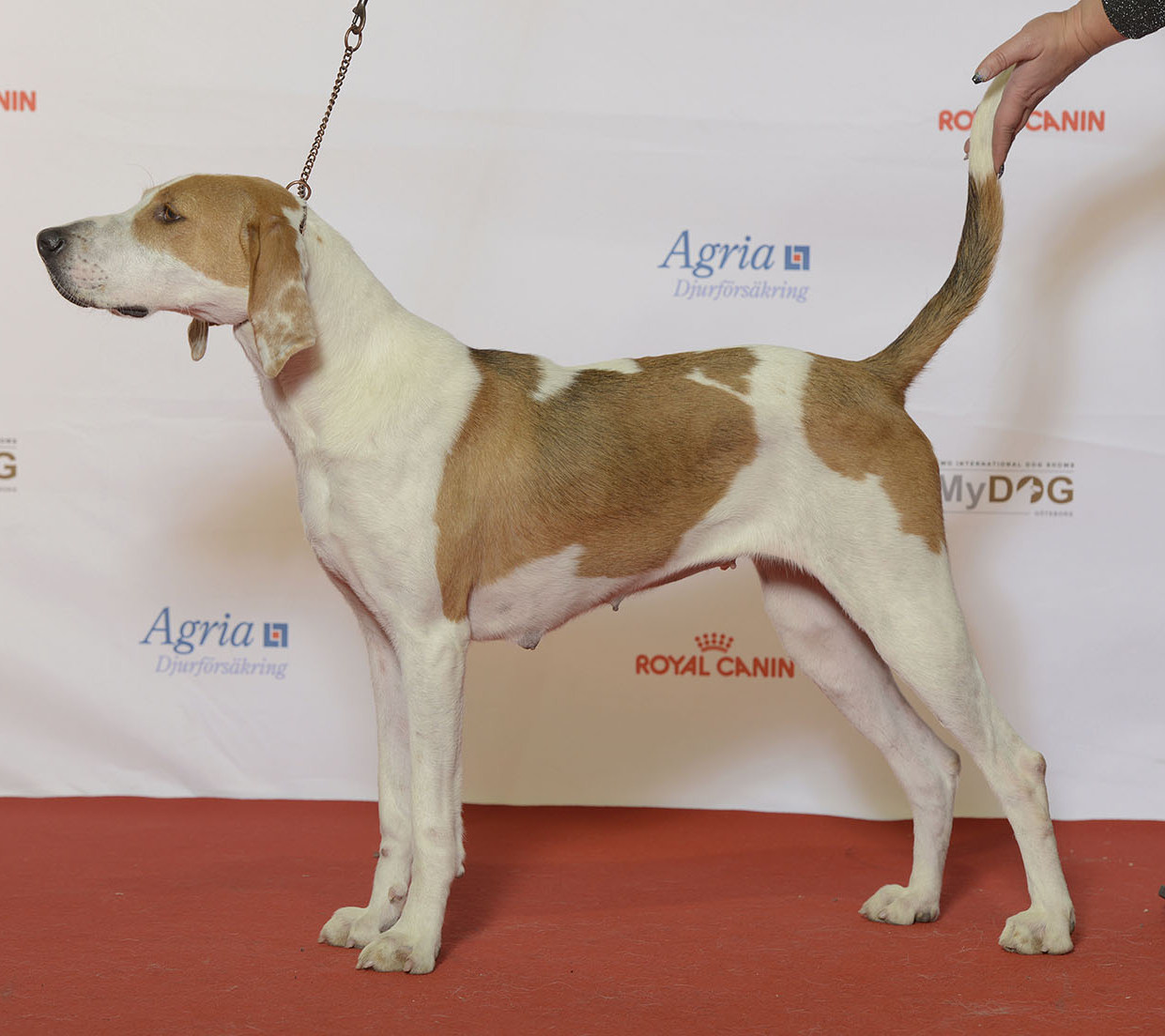
Long limbs, a moderately long muscular back, a deep chest and long soft ears are among the features described. The build reflects sustained hound work. A photograph shows an individual standing, not proof of endurance, health or a particular response to other animals.
For daily life, ask about secure opportunities to explore and what happens when an exciting scent appears. Vocal behaviour also matters when considering a home and its neighbours. Those practical questions should be answered by observation of the individual rather than a general description of a friendly hound.
Short-coat care still includes preparation
A professional can help choose gentle coat tools and assess skin and loose hair. Explain previous reactions to touching the feet or ears and to equipment noise. Working confidence outdoors does not guarantee comfort with unfamiliar close contact in a salon.
The licensed natural photograph identifies the dog as the American Foxhound Jaarapaa Flikka at a Swedish event. It illustrates one tan-and-white individual. The directory records breed development in the United States; it does not claim where most American Foxhounds live today.
Plan comfortable care
Our gentle coat-care guide and first grooming appointment guide help you prepare questions about handling, maintenance and a suitable service. This breed profile is independent of named businesses.
Photograph and sources
The photograph illustrates one American Foxhound. See the linked credit for its creator, source and reusable licence. It does not establish the dog's health, age or temperament.
Read the FCI catalogue entry and FCI breed standard. General care and handling guidance is available from PDSA and Dogs Trust.
Additional primary reading: American Kennel Club: American Foxhound.