October is a useful time to prepare for noisy autumn evenings. This is a seasonal care guide, not a report of a new law or a promise that one technique will suit every dog.
Make an optional quiet retreat
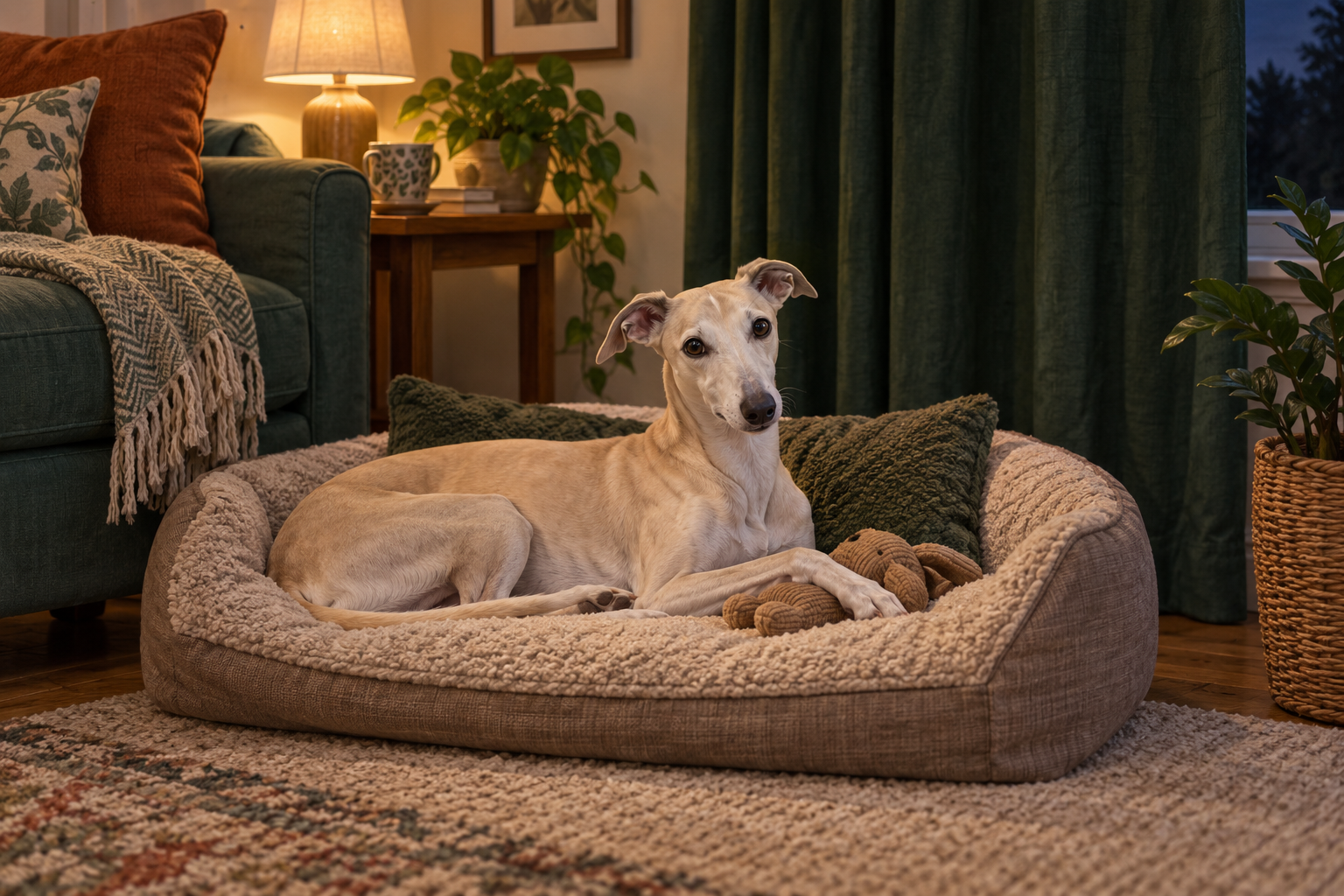
PDSA recommends preparing a familiar den before fireworks begin. Choose somewhere your dog already likes, add comfortable bedding and let them explore it freely. Keep the space accessible rather than shutting your dog inside. A safe retreat is a choice, not a punishment.
Plan the evening while it is quiet
Arrange walks before darkness and expected displays. Secure doors, windows and garden exits, and check that microchip contact details are current. Close curtains to reduce flashes and use familiar background sound at a comfortable volume. Stay nearby or arrange company from someone your dog knows.
Watch the dog rather than the calendar
Dogs Trust lists trembling, hiding, pacing and trying to escape among possible signs of fear. Allow your dog to settle where they feel safe; do not force them outside during fireworks or pull them from a hiding place. If they seek calm reassurance, respond to their individual needs.
Ask for help before fear escalates
If your dog has struggled with fireworks or starts showing distress, speak to your vet promptly. They can assess contributing health concerns and advise on appropriate behavioural support or treatment. Follow any prescribed instructions; this guide does not recommend medication, doses or unverified calming products.
Include grooming in your practical plan
Tell the groomer if your dog is sensitive to noise or handling. Discuss timing and breaks before booking. Explore nearby groomers, and use our dog-care guides for appointment preparation.
Reviewed sources
Dogs Trust: supporting your dog during fireworks; PDSA: dogs and fireworks. Advice checked on 4 October 2026. Original GroomNear guide prepared with AI assistance; the cover is an original generated illustration. For corrections, email support@groomnear.com.